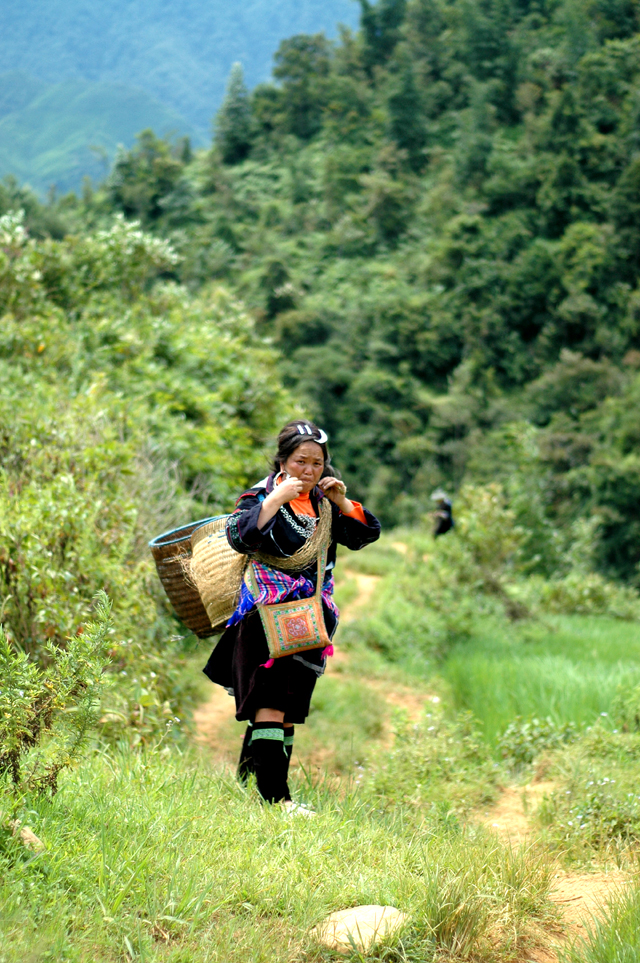
Sapa, Vietnam

Sapa, Vietnam

A LITTLE BIT OF LATELY

Wednesday, September 25, 2013


Just dropping in to share a favorite photo and a favorite article from recently. Early one evening in Hoi An, Vietnam, I spotted this elderly boat operator plying the river. When her vessel ran aground in the shallow water near the bank, she pulled it free with a strength that belied her fragile, bent frame. I love the look of sheer determination on her face.

This month I enjoyed writing about my favorite Korean custom, the public bathhouse, for Global Traveler's October cover story. I also got to share a bit more about our brief visit to North Korea via the Demilitarized Zone. Check it out here: http://www.globaltravelerusa.com/contemporary-seoul-turns-traditional-korean-delights/. Happy travels, wherever you roam this month!

AMONG THE HMONG

Friday, August 30, 2013


I had heard that the Hmong are snappy dressers, but my jaw still dropped at the sight of them when we pulled in to Sapa, a former hill station in northwestern Vietnam. Decked out in colorful embroidery, shiny jewelry, and velvety black legwarmers, they cut a regal form against the backdrop of terraced green rice fields. We hired one of them, a young woman named So, to guide us on a trek to the surrounding villages.

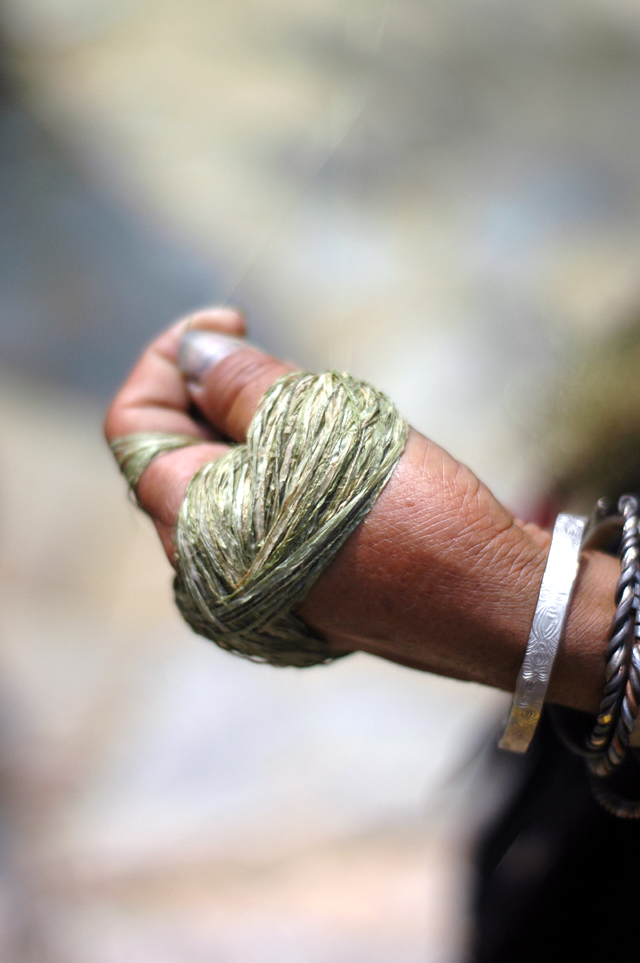
As we wove our way past water buffalos and bubbling mountain streams, we acquired a small following of women—one with deep wrinkles etched across her face, another with a gold tooth and a baby—until there were seven of us slipping along the muddy path. While Joe and I panted to match their pace, the Hmong kept their hands busy splitting and wrapping hemp fibers for the traditional clothes they make.

When we reached our destination five hours later, I collapsed in a heap. No one else seemed to have broken a sweat; the old woman was casually smoking tobacco from an enormous bamboo pipe. Turns out they had walked with us for half the day simply to sell us two dollars worth of hemp bracelets.

STEPPING INTO NORTH KOREA

Wednesday, July 31, 2013


“If you choose to defect today to North Korea, I won’t be responsible for your actions,” said Private Mitchell, the U.S. Army soldier who met our tour group inside the Demilitarized Zone. He wasn’t kidding—in 1984, a Soviet tourist ran across the demarcation line separating North and South Korea, and the ensuing gun battle killed four people.

We exited the tour bus into the bright summer sunshine at Panmunjeom, the abandoned village that has served as the de facto dividing line between the two countries since 1953. Not more than a hundred yards away, a North Korean soldier stood observing us through binoculars. I raised my telephoto lens for a closer look. He was young and thin, his dark olive uniform cinched tight at the waist.

After a few minutes, we entered one of the bright blue conference buildings that straddle the border. A South Korean soldier, his fists clenched at his sides in a Tae Kwon Do stance, stood blocking the back door. Gingerly we stepped across the invisible line dividing the room in half, unsure what to do with our three minutes standing on North Korean soil.

Despite the palpable tension at Panmunjeom, the DMZ is an almost scenic snatch of land, at least on the southern side. Driving between the various checkpoints, we spotted pheasants taking flight among the ginseng fields. The North Korean side is another story: behind the concrete facades of a ghost town (pictured above), vast swaths of trees have been cut down to expose anyone trying to escape.

TRISTES TROPIQUES

Tuesday, July 2, 2013


“Hello, my friend, you need sarong? Taxi? Hashish? I give you good price!”

The offers, polite but aggressive, followed us everywhere we wandered around Bali last week, from the motorbike-choked streets of Kuta to the near-deserted sands of Gili Air to the overgrown interior of Lombok. We had come to Bali to escape the incessant noise of South Korea, searching for the much-touted beaches backed by rice terraces and birdsong.

And we found them...but so had hordes of Bintang-guzzling Australian surfers, their biceps the size of tree trunks, drawing the peddlers of Pringles and hash like ants to a picnic. It wasn’t until our last night, when we decided to splurge on a stay at one of the many immaculate resorts, that we realized the key to our peace and quiet was the walls keeping out the hawkers--and Bali along with them.

Perhaps appropriately, I was reading Tristes Tropiques, a book by the anthropologist and self-proclaimed travel hater Claude Levi-Strauss. In 1955 he wrote of his journeys, “Now that the Polynesian islands have been smothered in concrete and turned into aircraft carriers solidly anchored in the southern seas, when the whole of Asia is beginning to look like a dingy suburb, when shanty-towns are spreading across Africa...what else can the so-called escapism of travelling do than confront us with the more unfortunate aspects of our history?”

WHEELS OF FORTUNE

Monday, June 3, 2013


Recently I was reading a Huffington Post article about overrated travel destinations, and the author suggested ditching Costa Rica for Hawaii because “the roads are better, things are a little tidier, most people speak English…the food is actually interesting and they have really great umbrella cocktails.”

No disrespect for Hawaii (I’ve never been), but I don’t agree that it should supplant Costa Rica on anyone’s travel itinerary just because it’s easier to navigate. Our adventures on Costa Rica’s crappy roads—including nearly squashing some pedestrians and being pushed backwards up an incline by a helpful group of Ticos—were some of my favorite memories from our trip around the country. Not because we enjoy complications (although everything running smoothly doesn’t make for nearly as good a story), but because the nature of our escapades was uniquely Costa Rican.

Perhaps that’s the difference between touring and traveling: Tourists try to minimize uncertainty with a regimented schedule and cultural encounters distilled through English-speaking guides, while travelers embrace the unknown—mishaps and all—as part of an authentic experience. All I know is that sitting on the beach with a bottle of Imperial and a bowl of ceviche is significantly more pleasurable after you’ve faced a few bumps in the road.

CAT POOP COFFEE

Tuesday, May 7, 2013


One day we were drinking coffee at the home of a Korean friend when she informed us that the beverage we were consuming had been made from cat poop. Naturally, we thought she was joking; then we were horrified as she insisted it was true. It wasn’t until I got home and Googled “cat poop coffee” that I fully believed what she was saying.

Apparently, when the Dutch established coffee plantations on the islands of Java and Sumatra in the 1800s, they prohibited the native farmers from picking any of the coffee for their own use. To skirt the rule, the farmers collected feces from a long-tailed cat called a civet (Not what’s pictured above. That’s just a Burmese temple cat.), which ate the coffee fruits but left their seeds undigested. The natives then cleaned, roasted, and ground the “kopi luwak,” and voila: cat poop coffee became a trend.

Eventually the plantation owners themselves began to favor the rare civet coffee, and in a Tom Sawyer-esque turn of events, it became the most expensive coffee in the world. These days it costs around $35 to $80 per cup and is consumed mostly in South Korea, Japan, and Taiwan. Although it’s plenty safe to consume (Trust me, I checked!), industry experts mostly concur that it’s a gimmick. I’d have to agree: it pretty much tasted like a stale cup of Folgers.

WORLD'S FRIENDLIEST PEOPLE

Wednesday, April 10, 2013


Last month the New York Times’ Frugal Traveler wrote an article deconstructing the question “Which country has the world’s friendliest people?”, while the World Economic Forum recently published this interesting map (note that South Korea ranks, along with Russia and Venezuela, among the least welcoming countries). Of course, there are good people in every country, and traveling usually results in some kind of connection with the locals. But when a people are extra hospitable/warm/welcoming, it can make a good trip truly memorable.

Such was the case when we visited Japan in February. Everywhere we went, we were overwhelmed with hospitality—from the ryokan owners who lent us snow boots to the innkeeper in Fukuoka who gave us her cast-iron squid ball pan. On our first trip there, in December, a young man went out of his way to help us buy subway tickets and take us to our train in Tokyo (an experience you can read more about in my article for this month’s Global Traveler).

Perhaps the best part about these interactions was that they were completely unexpected. Strangely, the Japanese have a reputation for coldness and xenophobia, but our exchanges were the complete opposite. In fact, I felt more welcome there than I ever have in Busan, where foreigners are a dime a dozen. Maybe that’s the key: places that aren’t overwhelmed by visitors are in the end more receptive to them.

have pen, will travel All rights reserved © Blog Milk Powered by Blogger