After two and a half years, we're saying goodbye to Asia for the second time (the first was when we left China in 2008). We've had some wonderful experiences: meeting the courageous women at Remember Nhu; cozying up to Japan's famous snow monkeys; setting foot, albeit briefly, in North Korea. And some terrible ones: living above a karaoke bar; accidentally imbibing "cat poop coffee"; seeing the garbage-strewn state of once-beautiful Bali.
And while I'm sure we'll return—Japan's charms are too alluring to resist—I'm excited to see at last what's in store on other continents. Starting in February, we'll be volunteering at Unidad Academica Campesina, a college for the rural poor in the mountains outside La Paz, Bolivia. The altiplano (high plains of the Andes) is a place I've dreamed about my whole life, so I'm curious whether it will be, as Bruce Chatwin wrote of Patagonia, "as I expected but more so, inspiring violent outbursts of love and hate."
LAO CHOW
Thursday, December 26, 2013
I can't speak to the French colonization of Laos during the early 20th century, but they sure left behind some stellar bakeries. Everywhere we turned in Vientiane and Luang Prabang, boulangerie counters were piled high with crusty baguettes, buttery croissants, and flaky pains au chocolat. Traveling from the bread barrens of South Korea (think red bean doughnuts and sugar-coated garlic rolls), I thought I'd landed in a sort of starchy Shangri-La.
But in addition to each perfect bite of pastry, I encountered a strong case for Laos' own cuisine at an innovative Luang Prabang restaurant called Tamarind. We spent a morning wandering the town's vegetable and meat market with Tamarind staff, examining everything from galangal (the gnarly root, which is a relative of ginger) and kaffir lime to shallots and lemongrass. After purchasing a bounty of produce, we returned to the restaurant's cooking school to prepare traditional dishes like roasted eggplant dip and spicy fish steamed in banana leaves.
Chicken feet, fortunately, were not on the menu...but have you ever seen such shapely-looking legs on poultry?
But in addition to each perfect bite of pastry, I encountered a strong case for Laos' own cuisine at an innovative Luang Prabang restaurant called Tamarind. We spent a morning wandering the town's vegetable and meat market with Tamarind staff, examining everything from galangal (the gnarly root, which is a relative of ginger) and kaffir lime to shallots and lemongrass. After purchasing a bounty of produce, we returned to the restaurant's cooking school to prepare traditional dishes like roasted eggplant dip and spicy fish steamed in banana leaves.
Chicken feet, fortunately, were not on the menu...but have you ever seen such shapely-looking legs on poultry?
HOI AN LANTERN FESTIVAL
Friday, November 29, 2013


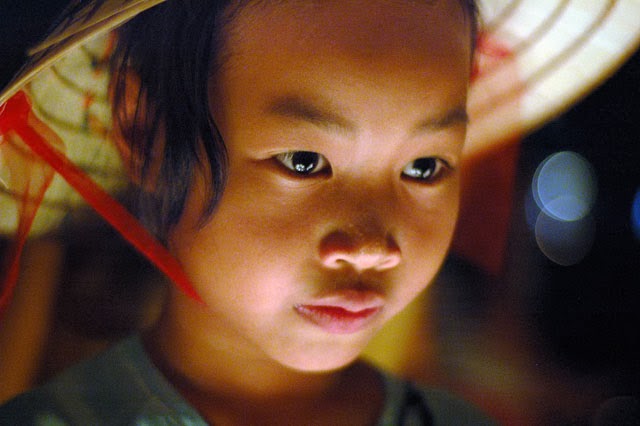
We had the good fortune of arriving in Hoi An, Vietnam during the full moon, which brings with it the celebration of the town's monthly Lantern Festival. As the sun disappeared, hundreds of colorful silk lanterns lit up the streets, and shopkeepers ignited small bonfires of fake Vietnamese currency in the gutters for good luck. Several string bands struck up their traditional instruments, and elderly men gathered on the sidewalk to play chess by candlelight.
We wandered along the riverbank, where impish girls in silk pajamas implored us to buy paper lanterns. Ultimately we gave in and joined the throngs of tourists, both Vietnamese and foreign, in setting a candle afloat on the river. We watched it get caught up in the stream of soft lights, bobbing gently until it collided with a river weed and went out.
THE MOUSTACHE BROTHERS OF MANDALAY
Tuesday, October 29, 2013
Three prison terms and six years of hard labor couldn't keep Par Par Lay from cracking jokes about the Burmese government. Up until he was admitted to the hospital for kidney disease in July, the 67-year-old comedian could be found each evening at his makeshift theater in Mandalay, waltzing in a papier-mache bear head and making wisecracks at the military's expense.
On August 2, he died at home surrounded by his family, including brother Lu Maw and cousin Lu Zaw. Together, the trio made up The Moustache Brothers, a comedy act that was one part slapstick, one part traditional Burmese dance performance, and one part ridicule of the military regime.
Until recently the Brothers—along with their wives, sister, and two-year-old granddaughter—performed nightly for foreign tourists in the front room of Maw's home in Mandalay, Myanmar's second-largest city. It was a low-key production, with a floral bed sheet draped over a clothesline serving as the backdrop, and Lu Maw sharing his Burmese cheroots with the guests.
The only Brother who is fluent in English, 62-year-old Maw served as the MC for the performance, addressing the audience with rapid-fire idioms—"Are you with me? You catch my drift?"—and alternately blowing a vuvuzela and puffing on cigars. As he narrated, Par Par Lay and Lu Zaw would act out scenes from their own lives and from popular a-nyeint pwe folktales about characters like U Shwe Yoe, a parasol-twirling bachelor looking for love.
A major event in Burmese culture, a pwe (festival) sometimes lasts all night and can include dancing, puppeteering, comedy, and drama. The Moustache Brothers' act is typical of an upbeat holiday program with a focus on dance and slapstick. Lay liked to tell a joke about going to Thailand to get dental work done: "The dentist asked me, 'Why not get your teeth fixed in your own country?' And I told him: 'Because in Myanmar, I'm not allowed to open my mouth!'"
It was at a 1996 performance in Aung San Suu Kyi's home that the family made their first political crack. They drew straws backstage to determine who would take on the riskiest role. Lay, who drew the short straw, made a comic comparison between government officials and thieves and was thereafter imprisoned three times. Both he and Zaw spent six years breaking rocks at a prison camp near the Chinese border.
After Suu Kyi and Amnesty International successfully negotiated their release, the Brothers were banned from performing in Burmese and in public. In adapting the show for tourists, they managed to both skirt the government restrictions and continue to make a living doing what they love.
"As long as the tourists keep coming, the government doesn't bother us," Maw said. "They wouldn't want to upset the foreigners."
Lay, in particular, was an active supporter of the National League for Democracy (the party of Suu Kyi), canvassing in rural areas and encouraging voters not to be afraid of politics. He was hopeful that the 2015 elections will bring real change to Myanmar, and longed for the day when the comedy troupe would again be allowed to take their act on the road for festivals, weddings, and funerals.
"We'll keep campaigning until Myanmar is a complete democracy," he said.
The remaining Brothers have vowed to continue the show, both to earn a living and to honor Lay's memory. The two-man performance began several days after his funeral, as messages of support from foreign tourists continued to appear on the Brothers' Facebook page.
"A big loss," wrote an American visitor who remembered Lay, "He will be missed by his friends all over the world."
On August 2, he died at home surrounded by his family, including brother Lu Maw and cousin Lu Zaw. Together, the trio made up The Moustache Brothers, a comedy act that was one part slapstick, one part traditional Burmese dance performance, and one part ridicule of the military regime.
Until recently the Brothers—along with their wives, sister, and two-year-old granddaughter—performed nightly for foreign tourists in the front room of Maw's home in Mandalay, Myanmar's second-largest city. It was a low-key production, with a floral bed sheet draped over a clothesline serving as the backdrop, and Lu Maw sharing his Burmese cheroots with the guests.
The only Brother who is fluent in English, 62-year-old Maw served as the MC for the performance, addressing the audience with rapid-fire idioms—"Are you with me? You catch my drift?"—and alternately blowing a vuvuzela and puffing on cigars. As he narrated, Par Par Lay and Lu Zaw would act out scenes from their own lives and from popular a-nyeint pwe folktales about characters like U Shwe Yoe, a parasol-twirling bachelor looking for love.
A major event in Burmese culture, a pwe (festival) sometimes lasts all night and can include dancing, puppeteering, comedy, and drama. The Moustache Brothers' act is typical of an upbeat holiday program with a focus on dance and slapstick. Lay liked to tell a joke about going to Thailand to get dental work done: "The dentist asked me, 'Why not get your teeth fixed in your own country?' And I told him: 'Because in Myanmar, I'm not allowed to open my mouth!'"
It was at a 1996 performance in Aung San Suu Kyi's home that the family made their first political crack. They drew straws backstage to determine who would take on the riskiest role. Lay, who drew the short straw, made a comic comparison between government officials and thieves and was thereafter imprisoned three times. Both he and Zaw spent six years breaking rocks at a prison camp near the Chinese border.
After Suu Kyi and Amnesty International successfully negotiated their release, the Brothers were banned from performing in Burmese and in public. In adapting the show for tourists, they managed to both skirt the government restrictions and continue to make a living doing what they love.
"As long as the tourists keep coming, the government doesn't bother us," Maw said. "They wouldn't want to upset the foreigners."
Lay, in particular, was an active supporter of the National League for Democracy (the party of Suu Kyi), canvassing in rural areas and encouraging voters not to be afraid of politics. He was hopeful that the 2015 elections will bring real change to Myanmar, and longed for the day when the comedy troupe would again be allowed to take their act on the road for festivals, weddings, and funerals.
"We'll keep campaigning until Myanmar is a complete democracy," he said.
The remaining Brothers have vowed to continue the show, both to earn a living and to honor Lay's memory. The two-man performance began several days after his funeral, as messages of support from foreign tourists continued to appear on the Brothers' Facebook page.
"A big loss," wrote an American visitor who remembered Lay, "He will be missed by his friends all over the world."
A LITTLE BIT OF LATELY
Wednesday, September 25, 2013
Just dropping in to share a favorite photo and a favorite article from recently. Early one evening in Hoi An, Vietnam, I spotted this elderly boat operator plying the river. When her vessel ran aground in the shallow water near the bank, she pulled it free with a strength that belied her fragile, bent frame. I love the look of sheer determination on her face.
This month I enjoyed writing about my favorite Korean custom, the public bathhouse, for Global Traveler's October cover story. I also got to share a bit more about our brief visit to North Korea via the Demilitarized Zone. Check it out here: http://www.globaltravelerusa.com/contemporary-seoul-turns-traditional-korean-delights/. Happy travels, wherever you roam this month!
AMONG THE HMONG
Friday, August 30, 2013


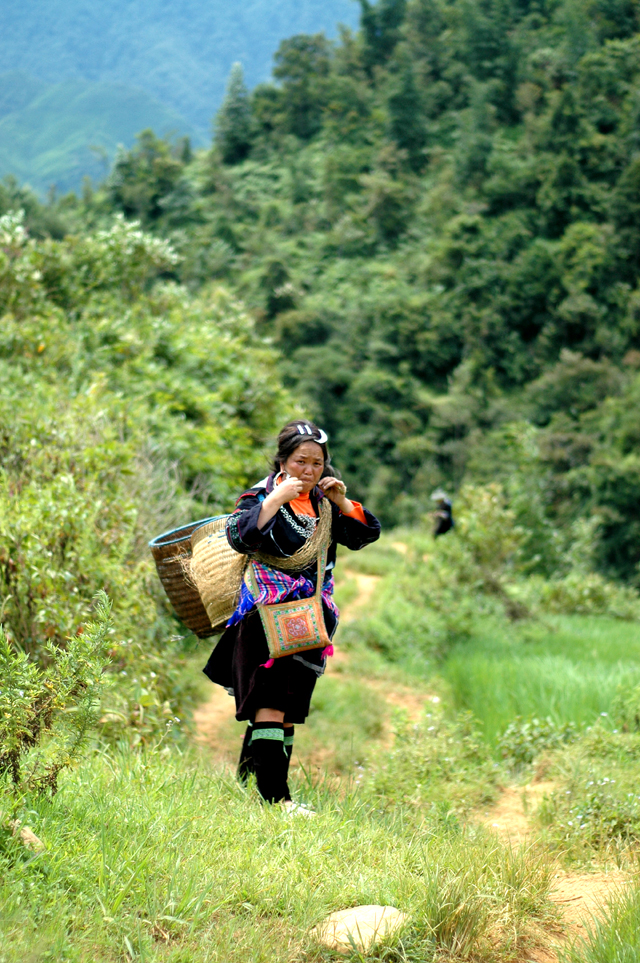
I had heard that the Hmong are snappy dressers, but my jaw still dropped at the sight of them when we pulled in to Sapa, a former hill station in northwestern
As we wove our way past water buffalos and bubbling mountain
streams, we acquired a small following of women—one with deep wrinkles etched
across her face, another with a gold tooth and a baby—until there were seven of
us slipping along the muddy path. While Joe and I panted to match their pace,
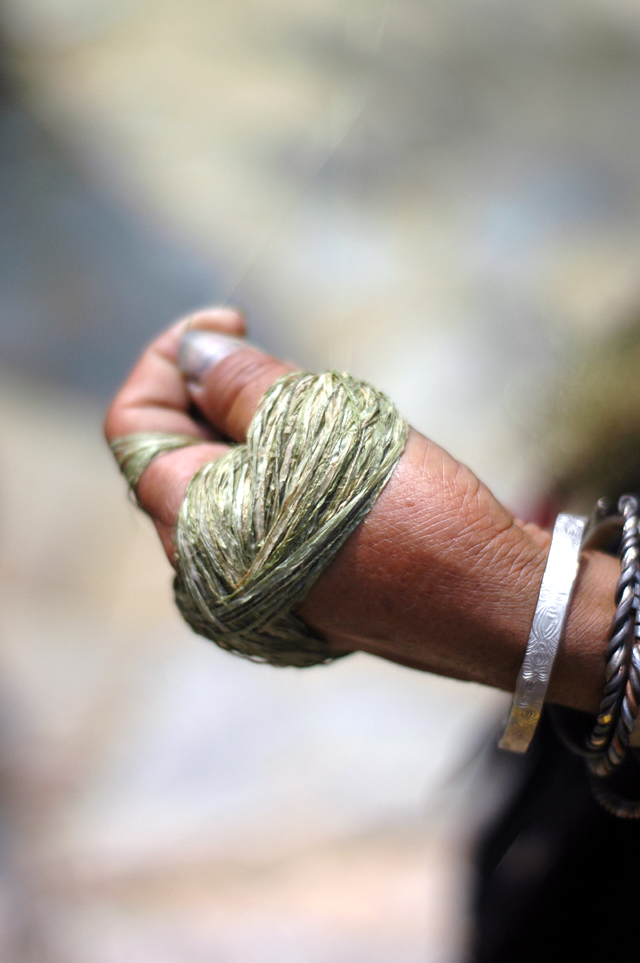
the Hmong kept their hands busy splitting and wrapping hemp fibers for the
traditional clothes they make.
When we reached our destination five hours later, I
collapsed in a heap. No one else seemed to have broken a sweat; the old woman
was casually smoking tobacco from an enormous bamboo pipe. Turns out they had
walked with us for half the day simply to sell us two dollars worth of hemp
bracelets.
STEPPING INTO NORTH KOREA
Wednesday, July 31, 2013
We exited the tour bus into the bright summer sunshine at
Panmunjeom, the abandoned village that has served as the de facto dividing line
between the two countries since 1953. Not more than a hundred yards away, a
North Korean soldier stood observing us through binoculars. I raised my
telephoto lens for a closer look. He was young and thin, his dark olive
uniform cinched tight at the waist.
After a few minutes, we entered one of the bright blue
conference buildings that straddle the border. A South Korean soldier, his
fists clenched at his sides in a Tae Kwon Do stance, stood blocking the back
door. Gingerly we stepped across the invisible line dividing the room in half,
unsure what to do with our three minutes standing on North Korean soil.
Despite the palpable tension at Panmunjeom, the DMZ is an
almost scenic snatch of land, at least on the southern side. Driving between
the various checkpoints, we spotted pheasants taking flight among the ginseng
fields. The North Korean side is another story: behind the concrete facades of
a ghost town (pictured above), vast swaths of trees have been cut down to expose
anyone trying to escape.
have pen, will travel All rights reserved © Blog Milk Powered by Blogger