Sapa, Vietnam

Sapa, Vietnam

MAKING FRIENDS

Sunday, February 28, 2016

"I would sooner be a foreigner in Spain than in most countries. How easy it is to make friends in Spain!" - George Orwell

I've always had the sense that people from other countries see Americans a bit like overgrown Labradors: gregarious and sloppy with our emotions, trying to make friends with everyone that we meet. As someone who's naturally cautious and introverted, I typically feel more comfortable on the periphery, taking photos and observing.

Living in Spain is chipping away at my reticence, in part because successful language learning requires frequently engaging in conversation, but also because Spaniards are so genuinely warm and welcoming. Even the wizened old waiters at the bodeguitas will crack a friendly smile beneath their outer veneer of brusque efficiency. Just yesterday as I sat in some ancient tavern waiting for my husband to make an ATM run, a shriveled septuagenarian sidled up with her glass of beer.

"Es tuyo?" she asked, pointing at my husband's leather messenger bag sitting on the empty seat. "Es preciosa," she said with an approving cluck. With that, we were launched into conversation about Sevilla, Spanish culture, and my reasons for visiting.

"Pero ya hablas muy bien!" is the typical refrain when I tell people that I'm studying Spanish--which isn't to brag that I'm particularly good at speaking Spanish (I'm not), but rather to comment on the easy conviviality of Sevillanos, who are, without exception, always willing to converse.

LIBRE SOY

Monday, December 28, 2015

It's finally here. A year in the making, Libre Soy: Portraits of a New Guatemala is my first book and my proudest achievement. This collection profiles Guatemalans who are bringing reconciliation and transformation to their communities following Guatemala's 36-year civil war. Profiles include:

-A pastor elected mayor who led his remote mountain village in building its first road to the outside world
-An abuse survivor who pioneered her community's first support groups for battered women
-A secretary who adopted a city slum and became mother and teacher to thousands

All proceeds from the book go toward the excellent work of Asociacion Equipando a los Santos Internacional (ASELSI) in Guatemala. Pick up a hardcover copy here or an e-reader version on Amazon.

KONOJEL COMMUNITY CENTER

Saturday, October 31, 2015

(Originally published in The Tico Times on October 1, 2015)

SAN MARCOS LA LAGUNA, GuatemalaAs 1 million Guatemalans face a food emergency in the drought-hit countryside, the U.N. warns that the country’s already-high child malnutrition is increasing. But at the Konojel Community Center on a sunny Monday afternoon, two dozen primary-schoolers are laughing and chattering as they play games on Android tablets and tackle homework problems with the help of volunteers. Having just finished a lunch of breaded broccoli with salsa, rice, and salad, the kids are alert and engaged as they participate in Konojel’s after-school program.

Founded in 2011 in San Marcos La Laguna, a town of roughly 3,000 Kaq’chikel Mayans on the shores of Lake Atitlan, the center started as a place where the town’s most malnourished inhabitants could eat one healthy, filling meal each day. Now Konojel (which means “all together” in Kaq’chikel) includes not only a lunch program that runs on fuel-efficient technologies, but also enrichment activities for children and job training for local women.

“We’re not looking to feed the whole town,” says Andrew Raphael, who co-founded Konojel with two friends after living and working in San Marcos as a Spanish teacher. “We’re looking to create programs that allow people to raise their standard of living.”

Nonetheless, Konojel’s lunch program has become a key resource in an area where nearly 70 percent of children grow up malnourished. Under the guidance of Maria Mejia, who manages Konojel’s daily operations, the center solicits recommendations from the local health center and family court for pregnant and breastfeeding mothers, elders, and young children who are unlikely to receive adequate nutrition at home.

“People in town know that we’re here and they can ask for help,” says Mejia. “Now when the children leave here, they don’t want to go home.”

“When they’re not getting this meal, they basically just eat tortillas,” adds Raphael. “It provides some relief for the elderly, but for the babies it’s life or death.”

However, cooking a balanced meal for more than 70 people a day soon posed its own problems. In Guatemala, where most ovens and stoves still use firewood, cooking large quantities requires enormous amounts of fuel. The program’s initial funding, a private monthly donation from an expat couple, ran out within a year.

In early 2014, an Austrian backpacker passing through San Marcos offered to show the center’s staff how to build a rocket stove, which uses a simple, high-temperature combustion chamber to increase fuel efficiency and reduce emissions. Within a few months, Konojel was 400% more fuel efficient, using half the amount of firewood to cook twice as much food. That same year, a nonprofit in the nearby town of Panajachel offered to build Konojel a solar oven and solar dehydrator, which now employ three women in the making and selling of beef jerky.

In addition to the dried food cooperative, the center trains local women to work in restaurants and cafes in the heavily-touristed towns around the lake. Elia, a 29-year-old mom who is part of the current kitchen team, says she has learned to make everything from pasta with homemade pesto to soups and vegetable dishes while cooking for the center’s lunch clients.

In November, Konojel will open a restaurant of its own where tourists can stop in for a traditional Guatemalan meal. Raphael hopes that the profits from the restaurant will completely fund Konojel’s programs. In the meantime, a 16-year-old from Long Island, Robert Subtirelu, recently donated $7,000 he had earned boarding dogs to cover the center’s after-school classes for the coming year.

“Where I grew up and the opportunities I have had, in a way makes me feel angry that not everyone is able to do the same thing,” Subtirelu says. “The next step is to send the kids onto high school and internships so that they can come back to San Marcos and improve the community themselves. Konojel is putting the power into their hands.”

HEMINGWAY DIDN'T COME HERE

Friday, September 25, 2015

(Originally published in The Tico Times on September 22, 2015)

HAVANA, Cuba—On a Friday night in Havana during the recent Biennial Art Exhibition, I watched a young performance artist contort herself as symbols of Cuban identity were projected onto her t-shirt—first, an old-timey car, then Che’s iconic visage and the white star of the Cuban flag—until ultimately she tore the t-shirt away from her body and stood half-naked before us.

I was visiting La Fabrica, a multi-level art and music complex in Vedado, a middle-class neighborhood west of Havana’s center. Young, hip Cubans and grey-haired artists passed from room to room sipping daiquiris and examining the photographs, paintings, and performance art. I could hear snatches of German, French, and Italian as small groups of Europeans drifted through the halls.

“If you don’t mind my saying it, they want to come here before all the Americans,” said Elaine Guzman, a 28-year-old Havanan who, like many of the highly-educated young people I met, speaks four languages.

In the rush to visit Cuba “before everything changes,” I traveled to Havana at the height of the month-long Biennial, when the city was flooded with international artists and collectors. And while my friends and I dutifully toured the Rum Museum and downed mojitos in Hemingway’s favorite haunts, we quickly learned that Havana has more to offer than the rote sites travelers have been visiting for the past 60 years.

Much of the attraction of Havana is undoubtedly its locked-in-time look: Baroque buildings painted cream and pastel pink decay like collapsing birthday cakes. Mid-century Chevys and Chryslers rumble past in electric shades of purple and green. Aside from the occasional political slogan—“Socialism or Death!” “Fidel, always Fidel!”—there are no billboards. Without internet or air conditioning, Habaneros spend their free time in the street or in public parks playing chess, arguing baseball news, and talking with neighbors. In five days I didn’t see a single person looking at a smartphone.

At the recommendation of Pico Iyer—who wrote extensively about the island during its “Special Period” of economic crisis in the ’90s—I stayed at the Hotel Inglaterra, a creaky old behemoth surrounded by the classical domes and towers of the Capitolio, the Gran Teatro, and the Museo de Bellas Artes.

Straddling the line between well-preserved Old Havana and more decrepit Central Havana, it proved to be an excellent base for exploring the city by foot. In the maze of unpaved side streets, I passed vendors selling bananas and avocados from carts, and people lined up outside panaderias with their ration cards.

According to a long-running joke in Cuba, the three greatest accomplishments of Fidel’s revolution were health, education, and sports; the three greatest failures were breakfast, lunch, and dinner. Fortunately, with a loosening of restrictions on private eateries in the past five years, good food is becoming easier to find in Havana’s paladares, or family-run restaurants.

At the most famous of them, La Guarida—where the touted celebrity visitor isn’t Hemingway but Rihanna, who traveled to Havana last month—reservations are required. At others, such as the more off-the-beaten-path Restaurante La Casa, set within a retro pink-and-white home in Vedado, we were the only diners. Appetizers of fried malaga and octopus ceviche filled the table as we waited for our entrees of succulent lamb, lobster, and red snapper.

Owner Alejandro Robainas, a suave Havanan with a faint resemblance to Fabio, seemed thrilled to be hosting a group of American tourists and supplied us with decade-old Havana Club rum and recommendations for local discotecas. Like all of the Habaneros we met, he sees American tourism as an opportunity.

“People like Marco Rubio think that you’re giving money to Fidel, but you’re also giving money to the Cuban people,” he said.

The Cuban convertible peso, which tourists use to pay for everything from hotels and restaurants to taxis and tour guides, is the equivalent of an American dollar and worth 25 times as much as the regular Cuban peso (the currency with which Cubans at most jobs are paid). The discrepancy allows a growing number of independent workers in the tourism industry, such as guides and taxi drivers, to earn more than a doctor or a lawyer.

Though I wasn’t planning to purchase any art, I found Havana’s galleries—which range from venues like La Fabrica to less formal artist's studios—to be some of the most dynamic places in the city to spend an evening. After running across a group of tango dancers on the Paseo del Prado pedestrian street, I followed their advice to visit El Ojo del Ciclon, the studio of local artist Leo D’Lazaro.

D’Lazaro describes himself as needing human activity around him to create art, as evidenced by the low hum in the studio. Several couples tangoed slowly around the room with their eyes shut, while a group played dominoes in a dimly-lit corner. A girl in a long dress swayed back and forth on a swing that hung from the ceiling. Two young men excitedly spun the rods of a foosball table, its players replaced by grotesque figures, and someone served Cuban espresso from a tray.

On the t-shirt of one of the young men were the words “Hemingway no vino aqui.”—Hemingway didn’t come here.

CUBA LIBRE

Tuesday, July 28, 2015

There aren't many laws I'm willing to flout, but archaic travel restrictions are among them. In any case, the momentum of Cuba's opening to the U.S. seems to be growing every week, with the American Embassy in Havana reopening this month after half a century. The rapid warming in relations—combined with the fact that travelers haven't been fined for visiting Cuba in decades—spurred my decision to visit for the Havana Biennial Art Exhibition earlier this summer.

From university students to taxi drivers, the Habaneros I spoke with were unanimously enthusiastic about the reestablishment of diplomatic relations. Granted, they also have much to gain from the wave of American tourism that has already begun. Highly educated and ambitious, young Cubans are increasingly joining a new workforce of freelance translators, restaurateurs, and business owners whose salaries are not payed by the government.

"It's human nature to want the opposite of what you have," said Elaine, a 28-year-old Havanan who is saving for a house by working as a language tutor and tour guide.

Indeed, I couldn't help being captivated by the cadence of life in Havana, where neighbors play checkers in public parks rather than watch television and tango along the Paseo del Prado instead of gazing at smartphones. It's a singularly rhythmic place, where music and dance are woven into the everyday. (Watch my video to see Cuba in motion.) I'd love to visit again and again—hopefully next time legally.

HUMBLE BLOOD AND MARMALADE

Saturday, May 16, 2015

The United Fruit Co.
Pablo Neruda

When the trumpet sounded, everything
on earth was prepared
and Jehovah distributed the world
to Coca Cola Inc., Anaconda,
Ford Motors and other entities:
The Fruit Company Inc.
reserved the juiciest for itself,
the central coast of my land,
the sweet waist of America.
It re-baptized the lands
"Banana Republics"
and on the sleeping dead,
on the restless heroes
who'd conquered greatness,
liberty and flags,
it founded a comic opera:
it alienated free wills,
gave crowns of Caesar as gifts,
unsheathed jealousy, attracted
the dictatorship of the flies,
Trujillo flies, Tachos flies,
Carias flies, Martinez flies,
Ubico flies, flies soppy
with humble blood and marmalade,
drunken flies that buzz
around common graves,
circus flies, learned flies
adept at tyranny.

The Company disembarks
among the blood-thirsty flies,
brim-filling their boats that slide
with the coffee and fruit treasure
of our submerged lands like trays.

Meanwhile, along the sugared up
abysms of the ports,
indians fall over, buried
in the morning mist:
a body rolls, a thing
without a name, a fallen number,
a bunch of dead fruit
spills into the pile of rot.

GUATEMALA IN COLOR

Saturday, April 11, 2015

While the Midwestern weather remains stubbornly grey, I'm dreaming about the Pantone palette of Guatemala, where every surface seemed saturated with bubblegum pink, tomato red, cantaloupe, or cornflower. Even the cemeteries are landscaped in rainbow colors, offsetting the sorrow of losing a loved one with a vivid celebration of the afterlife. Who would want a pallid mausoleum when you can have one splashed with your favorite hue?

Fortunately, my summer plans are shaping up to include some travel to Latin America and its Technicolor landscapes: Cuba, Mexico, and a possible return to Guatemala. In the meantime, I'll be shutting out the overcast skies and turning up the Buena Vista Social Club.

MASSACRE IN COCOP

Saturday, March 21, 2015

When the soldiers came, Maria Brito and her husband ran for the mountains. It was Easter Weekend 1981, two decades into the bloody Civil War ignited by the U.S. overthrow of Guatemala's democratic government.

The next morning, the Britos could see cooking fires smoldering in Cocop, their community of 60 Ixil Mayan families. But as they drew closer, they realized the smoke was rising from piles of their neighbors' bodies, their flesh eaten by dogs. Among the 68 people massacred by the Guatemalan Army were Maria's parents, brothers, and sisters, whom she found locked inside their home and burned to death.

“Everyone was campesinos (farmers),” says Maria's husband, Andres. “The Army didn’t ask if we were guerrillas, they just killed everyone, even the little babies.”

Last year, former army general Rios Montt was put on trial for committing genocide during his scorched earth campaign to crush Communist rebels hiding in the mountains. During his presidency in the 1980s, Montt had been hailed "a man of great personal integrity" by Ronald Reagan, receiving millions of dollars worth of military supplies from the Reagan administration.

Montt was convicted of the murders of 1,771 Ixil Mayan people, including Maria's family. A week later, the conviction was overturned because of a legal technicality. He had been sentenced to 80 years in prison; he served only one day.

KOVAL DISTILLERY

Sunday, January 4, 2015

Last week I took a tour of KOVAL, Chicago's first distillery since the 1800s, and I learned a thing or two about spirits from the tour guide, Oopey:

-George Washington operated one of the nation's largest distilleries at Mount Vernon. Also, his leveraging of tax on whiskey nearly sparked the nation's first Civil War, the Whiskey Rebellion.

-The women's temperance movement began just outside Chicago in Evanston, Illinois.

-During Prohibition, you could still buy alcohol at Walgreens with a prescriptionone of the reasons there are so many Walgreens stores today.

-The insides of whiskey barrels are lit on fire because charcoal works as a natural filter.

-Gin is more or less vodka infused with botanicals (which explains why I find it so easy to drink).

Aside from the nifty facts, I liked tasting the differences between the various organic millet, oat, and rye whiskeys that KOVAL produces (though my absolute favorite was their ginger liqueur). The distillery has been named one of the 10 most influential craft whiskey makers, so it's certainly worth a trip to their research and development facility in Ravenswood to sip and swizzle.

THANKFUL

Friday, November 28, 2014


This year I'm especially thankful for family and friends, whose phone calls, hugs, and cups of coffee are salt and light.

RECIPE: BROWN BUTTER SALTED HONEY PIESource: Kinfolk Magazine
Ingredients
For the crust
1/2 cup (115 grams) very cold unsalted butter, cut into 1/2-inch cubes
1/2 cup (120 milliliters) ice water 
1 1/2 teaspoons (8 grams) white sugar
1 1/4 cups (160 grams) all-purpose flour, plus more for dusting
1/2 teaspoon (3 grams) salt
1 egg beaten with a splash of water for egg wash 
For the filling
3/4 cup (1 1/2 sticks / 170 grams) unsalted butter
3/4 cup (255 grams) honey (lavender or orange blossom are ideal)
1 cup (200 grams) granulated sugar
2 tablespoons (15 grams) all-purpose flour 
3/4 teaspoon (4 grams) salt
1 tablespoon (15 milliliters) lemon juice 
5 large eggs
2 teaspoons (10 grams) pure vanilla extract or vanilla paste
1 cup (235 milliliters) heavy cream 
Flaky sea salt for topping 
Method
For the crust: In a large bowl, whisk together the flour, sugar and salt. Sprinkle the cubed butter into the flour mixture, and using your hands or pastry blender, begin working the butter into the flour. Once the butter is a little bigger than pea-size pebbles, start drizzling in half of the water and incorporating it into the flour mixture with your hands or a spatula. Drizzle in more water 1 tablespoon at a time until the dough comes together. Gently knead the dough on a lightly floured work surface and shape into a disk. Wrap the disk in plastic wrap and place in the refrigerator for at least 1 hour. When ready, roll the crust to 1/8-inch thickness and transfer to 10-inch pie pan and crimp. Cover with plastic wrap and let the piecrust chill in the refrigerator for at least 1 more hour. Just before filling, brush the entire crust with the egg wash.
For the filling: Preheat the oven to 350°F (177°C). Melt the butter in a saucepan over medium heat. The butter will start to simmer and foam. As the foam subsides, stir the butter constantly and watch for it to turn golden and then brown, about 10 minutes. Once it turns brown, quickly remove from heat, add the honey and stir until it dissolves. Let the mixture cool slightly, about 10 minutes.
Whisk together the sugar, flour and salt in a medium-size bowl. Stir in the brown butter, vanilla paste and lemon juice, and whisk until thoroughly combined. Add the eggs, one at a time, whisking after each addition. Whisk in the heavy cream.
Pour the filling into the chilled piecrust. Bake the pie on the center rack in the oven for 60 to 75 minutes, rotating the pie halfway through baking. The pie is done when it turns deep golden brown on top. It should be puffed up and set around the edges but should still slightly jiggle in the center. Let rest at room temperature for at least 4 hours. Sprinkle with flaky sea salt.

ROAST POST: WATER AVENUE COFFEE COMPANY

Friday, October 31, 2014

Favorite Roast: No. 7 House Blend

While researching a blog post for work, I stumbled upon the happy fact that many of my favorite Portland, Oregon microroasters now ship their beans around the country. One of them is Water Avenue Coffee Company, whose neon-lit cafĂ© and No. 7 House Blend I just discovered on my last visit to Portland (despite the fact that they've been creating handcrafted coffees since 2009). What impressed me most about Water Avenue wasn't just the vintage packaging and smooth flavor of my pour-over coffee, but the friendliness of the baristas—not in a bubbly, green-aproned way, but showing genuine interest in human beings as well as hand-brewed coffees.

In writing-related news, be sure to check out my predictions for "China's Next 10 Years" in terms of business and development for October's Global Traveler.
Photos by Joe Voigts  

HUZZAH!

Sunday, September 28, 2014

Just popping in to share a few links from around the web, along with this photo of a satisfied goat that I met at the Sandwich Fair (named for the city of Sandwich, not because the fair celebrates sandwiches) a couple weeks ago...

In the July issue of Global Traveler magazine, I shared the latest on Beijing's air pollution problems and what the city is doing (and not doing) to clean up its act.

The August issue of Global Traveler included my first spa review, in which I tried something dubbed the "Experience Shower." Just figuring out how to turn it on was an experience.

I'm excited to be joining a group of creative Portlanders in creating a coffee table book about Guatemala missions! The book will be modeled on Brother/Sister, a collection of stories about hope and transformation in Southeast Asia created by some very talented friends. Our team will be heading to Guatemala for a week in February to collect interviews and photographs.

If you read Half the Sky: Turning Oppression into Opportunity for Women Worldwide, check out Nick Kristof and Sheryl WuDunn's new book A Path Appears. Kristof will be speaking about international development with the Chicago Council on Global Affairs on October 15 at the InterContinental Chicago. Details are here.

THE PERSEIDS

Tuesday, August 19, 2014


Once a year, the earth passes through a debris field left behind by the Swift-Tuttle comet. Enormous pieces of grit slam into our atmosphere at 130,000 miles per hour, light up the night sky, and flare out in seconds. Apparently, when the comet's predicted orbit near the sun was off by 17 days in 1992, there was some concern that it might come dangerously close to the earth or moon on its next passage in 2126. Frightening how cameras and telescopes (or photographing through a telescope, which is how I captured the image above) can mislead as they magnify, transforming speeding bullets into baubles.

I like how Annie Dillard put it in her essay on experiencing a solar eclipse: "The lenses of telescopes and cameras can no more cover the breadth and scale of the visual array than language can cover the breadth and simultaneity of internal experience. Lenses enlarge the sight, omit its context, and make of it a pretty and sensible picture, like something on a Christmas card. I assure you, if you send any shepherds a Christmas card on which is printed a three-by-three photograph of the angel of the Lord, the glory of the Lord, and a multitude of the heavenly host, they will not be sore afraid. More fearsome things can come in envelopes."

CITY OF ANGELS

Wednesday, July 30, 2014

Photo by Ashleigh Bateman 
The first time I visited Los Angeles, I considered it divine intervention. I was 10 years old, and, like any 10-year-old in 1994, my life revolved around watching Jurassic Park on VHS at least once a day. I dreamed about Isla Nublar. I wrote Jurassic Park fan fiction. And then, one day, I won a trip to Universal Studios for the opening of the Jurassic Park ride (divine intervention, I think, but also the result of taping “Xena: Warrior Princess,” waiting for a code word to flash on screen, and depositing said code word in a ballot box at a local fried chicken joint).

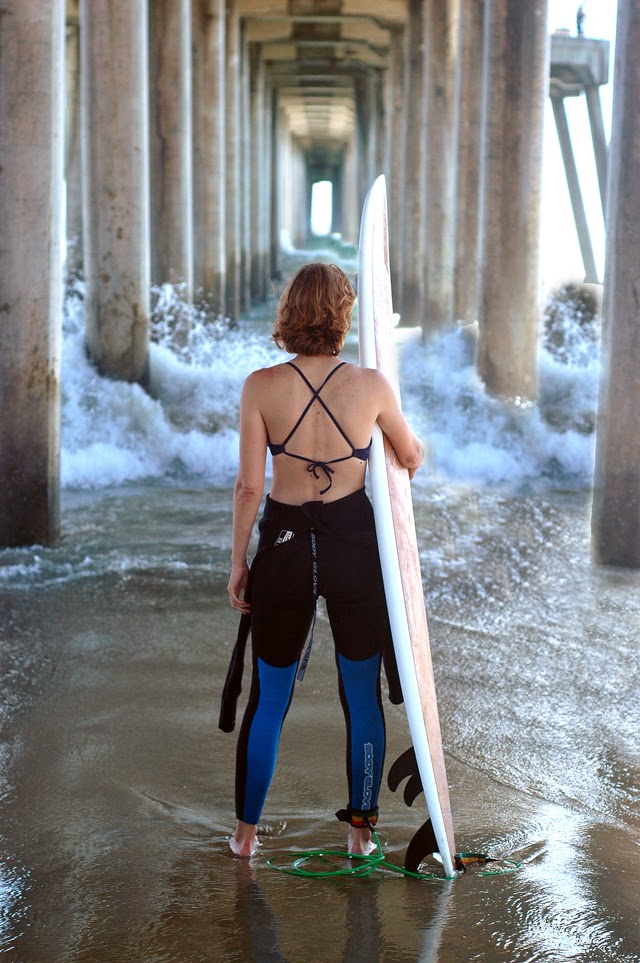
The magic hasn’t worn off. Whenever I go to Los Angeles, I’m still just as enchanted as the weekend when I faced down a T-Rex eight times in a row. Whether it’s the moongazing at Griffith Observatory, the hike to the Hollywood sign, or surfing at Huntington Beach Pier, the city always feels like a new adventure to me.

LOGAN SQUARE FARMER'S MARKET

Sunday, June 29, 2014


Just dropping in to share a few images from my neighborhood farmer's market. I can't believe my good fortune in having moved to Logan Square, whose summertime loveliness almost rivals Southeast Portland's. Right now the Sunday farmer's market is bursting with peonies, Michigan strawberries, and radishes. When I go running through the park in the evenings, it seems as though the whole neighborhood is outside soaking in the summer: quasi-gypsies selling their clothing from blankets, Puerto Rican grandpas chatting on park benches, and slackliners practicing their tightrope act between the trees. Best of all are the lightning bugs, which I'm just now seeing for the first time. Who would have thought you could go 29 years without encountering a lightning bug, only to discover them in the middle of Chicago?

BEHIND THE SCENES IN HSIPAW

Friday, May 30, 2014

If you saw my essay for The Christian Science Monitor a couple weeks ago, you know about my serendipitous encounter with a Burmese bookshop owner in Myanmar's Shan State. But what I didn't share in the articleboth to protect the bookseller's identity and for lack of spaceis this man's fearless crusade for education in the impoverished countryside.

When we asked if there was anything we could do to assist him, he immediately set to action. With the equivalent of $50, we walked to the market and selected hundreds of school notebooks, pencils, erasers, and pens. It wasn't the first time he had gotten foreigners involved in delivering school supplies, and for this the government had forbidden him to travel outside of town. "But I know how to avoid the checkpoints," he said with a grin.

The next morning we met him and a friend and, with the enormous stacks of notebooks balanced precipitously on their motorbikes, set off around the countryside. We sped along the main road lined with prehistoric-looking shade treesplanted by the former prince of Shan State, he merrily called outbefore bouncing our way through the rice paddies to one-room schoolhouses.

Eight elementary schools, two rainstorms, and one flat tire later, we had dispensed of all our supplies. Over curries and flatbreadwhich our new friend insisted on buyinghe rhapsodized over War and Peace. "The way that Natasha and Nicholas grow from children into adults, oh, it is a very good book! My granddaughter is in the seventh grade, and she can't even recite her ABCs. How is she going to read Tolstoy with this kind of education?"

BOSTON IN BLOOM

Wednesday, April 30, 2014


"Whether it is that the faith which creates has dried up in me, or that reality takes shape in memory alone, the flowers I am shown today for the first time do not seem to me to be real flowers." - Marcel Proust, Swann's Way

Some people disparage the smell of "beauty bark," but to me a whiff of mulch is the olfactory equivalent to Proust's tea-soaked madeleine. It summons spring, which in Boston is a surreal explosion of prim whites and dusky pinks. The trees on Commonwealth Avenue fuzz over with apple blossoms, pear blossoms, and magnolia, their petals a collective blur that resembles cotton candy.

Even better are the too-short weeks when the tulips bloom, and the Public Gardens become a riot of fire-engine red, canary yellow, and purple shot through with gold. The best way to experience springtime in Beantown is with lunch at one of Newbury Street's many outdoor patios (I'm a fan of Scoozi), followed by a slow amble down Comm Ave, Marlborough Street, or Beacon Street all the way to Boston Common.

And if you happen to be headed to Sydney, another city steeped in color (mostly shades of blue), be sure to check out my business traveler's guide in this month's issue of Global Traveler Magazine.

A SPACIOUS PLACE

Wednesday, March 26, 2014


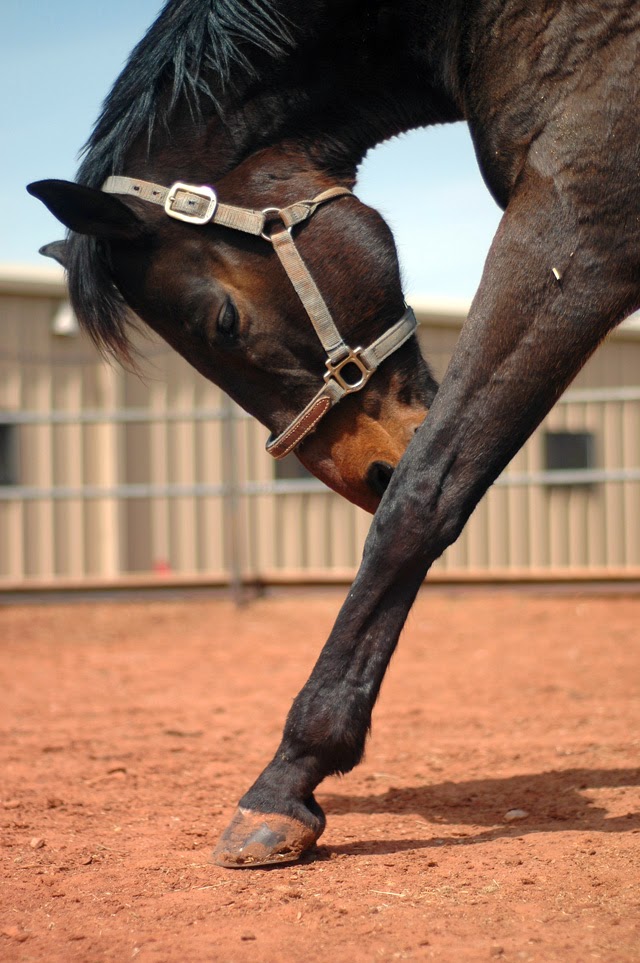
I used to hate Oklahoma's featureless spaces, to find the empty landscape almost maddening. But now that I've lived in a place so choked with concrete apartment towers that I couldn't even glimpse a patch of sky, a place so dark and dank that mold was sprouting from the walls, something about the expansive emptiness of the Oklahoma horizon seems consoling. It reminds me of this verse from Psalm 18: He brought me out into a spacious place; he rescued me because he delighted in me.

Oh, and the elegant creatures above? They live at Silver Wind Stables, a little piece of equine paradise owned by my friend Ashley. Look it up if you're ever in town; there's nothing quite as comforting as a horse's muzzle.

FAREWELL, ASIA!

Wednesday, January 29, 2014

After two and a half years, we're saying goodbye to Asia for the second time (the first was when we left China in 2008). We've had some wonderful experiences: meeting the courageous women at Remember Nhu; cozying up to Japan's famous snow monkeys; setting foot, albeit briefly, in North Korea. And some terrible ones: living above a karaoke bar; accidentally imbibing "cat poop coffee"; seeing the garbage-strewn state of once-beautiful Bali.

And while I'm sure we'll returnJapan's charms are too alluring to resistI'm excited to see at last what's in store on other continents. Starting in February, we'll be volunteering at Unidad Academica Campesina, a college for the rural poor in the mountains outside La Paz, Bolivia. The altiplano (high plains of the Andes) is a place I've dreamed about my whole life, so I'm curious whether it will be, as Bruce Chatwin wrote of Patagonia, "as I expected but more so, inspiring violent outbursts of love and hate."

LAO CHOW

Thursday, December 26, 2013

I can't speak to the French colonization of Laos during the early 20th century, but they sure left behind some stellar bakeries. Everywhere we turned in Vientiane and Luang Prabang, boulangerie counters were piled high with crusty baguettes, buttery croissants, and flaky pains au chocolat. Traveling from the bread barrens of South Korea (think red bean doughnuts and sugar-coated garlic rolls), I thought I'd landed in a sort of starchy Shangri-La.

But in addition to each perfect bite of pastry, I encountered a strong case for Laos' own cuisine at an innovative Luang Prabang restaurant called Tamarind. We spent a morning wandering the town's vegetable and meat market with Tamarind staff, examining everything from galangal (the gnarly root, which is a relative of ginger) and kaffir lime to shallots and lemongrass. After purchasing a bounty of produce, we returned to the restaurant's cooking school to prepare traditional dishes like roasted eggplant dip and spicy fish steamed in banana leaves.

Chicken feet, fortunately, were not on the menu...but have you ever seen such shapely-looking legs on poultry?

have pen, will travel All rights reserved © Blog Milk Powered by Blogger